Showing posts with label Dave Ramsey. Show all posts

Friday, February 14, 2014

Free Ride Project - Edmunds Style

Good ideas have legs. The Dave Ramsey "Drive Free for Life" has been duplicated by and of Edmunds.com. The idea has been sited in Australia as I posted previously. The name of the Edmunds duo's article is "The Debt-Free Car Project".


1996 Lexus ES 300 - Model of the Edmunds Duo

Wednesday, January 15, 2014

Drive Free For Life - Down Under


Often good ideas don't go anywhere. Sometimes they get feet and walk around a bit. The Dave Ramsey "Drive Free for Life" plan is a idea with feet. It walked all the way down under Barefoot via Scott Pape "The Barefoot Investor".

Tuesday, December 17, 2013

Free Ride Project Progress Report - End of Year 2013


This is the first progress report of the "Free Ride Project".  When we begun this experiment we had the following cars:
  • Car A: Ramsey Rover - 2000 Ford Windstar Mini-Van with around 208,000 miles
  • Car B: Green Machine - 1998 Jeep Cherokee with 230,000 miles
  • Savings assigned to car: $4000
The following changes happened:
  • Phase I car purchased: The Sportscar - 1994 Honda Accord with  168,570 miles (but with a new engine with only 10,000 miles) - Purchased for $3400
  • The Ramsey Rover was deemed beyond economic repair - Sold for $700
  • Insurance was changed to have better coverage and $100 less per month
  •  $1400 was put into the car to improve the ride
The following results are:
  • Cost of the car was $4142 (Initial Cost + Repairs/Upgrades - Sale of RamseyRover)
  • Gas savings for first seven months $840 ($120 a month by using Accord and not Windstar)
  • Gas savings for first seven months $700 ($100 a month by carpooling 2x a week with wife)
  • Savings on insurance rate for first seven months $700 ($100 a month difference)
In seven months the complete savings by the changes is $2240 which means the car actually cost me $1902 out of pocket to buy. At this rate the car will be "paid" for from the initial investment within six months.

The mileage on the Sportscar went from 168,570 miles (10,000 mile engine) to 178,660 miles (20,420 miles on the engine) The Green Machine now has 241,000 miles on it.

So let me know with a comment of what you think.


Tuesday, August 27, 2013

Free Ride Project - The Application Plan

Free Ride Applied is the outline of "The Plan" to apply the Dave Ramsey "Drive Free for Life" video / concept. The difference is I'm going to actually apply the concept to real life. Of course the example in the video will be changed to my liking as outlined below:

Dave Ramsey Example w/ Assumptions:
  • New car cost: $26,000
  • Car Payment: $475 per month
  • Loan Term: 6 years @ 9.6%
My Start w/ Starter Cars:
  • Car A: Ramsey Rover - 2000 Ford Windstar Mini-Van with around 208,000 miles
  • Car B: Green Machine - 1998 Jeep Cherokee with 230,000 miles
  • Savings assigned to car: $4000
The basic breakdown I'm going to follow is:
  1. Save, Sell & Upgrade Stage
  2. Keep & Invest Stage
  3. Ride, Upgrade and Invest Stage
  4. Invest, and Rest Stage

Save, Sell & Upgrade
  1. Save at least $1500 for phase 1 car (this is the initial car to get you from point A to B)
  2. Buy at least a $1500 - $4000 value car (do due diligence on purchase) This is the phase 1 car. Of course the more I can put down the faster I can get to my goal of having a paid for nice car
  3. Save for 10 months a "car payment" we would normally be putting towards a car bought with borrowed money. Dave Ramsey's video says $475 per month, we decided on at least $200 per month (knowing it will take loner to get to our goal)
  4. Sell phase 1 car and add the 10 month savings to purchase phase 2 car. This would be the upgraded car better than phase1 but, not at our goal yet.
  5. Repeat steps 3-4 until a car is purchased which is at the level we feel good driving at. (most likely at the $10,000 level.) This is the phase X car.
Keep & Invest
  1. Keep the Phase X car
  2. Ride it for the remainder of what would have been the 6 year term had we bought a car at the beginning of the project with debt, instead of buying a phase 1 car.
  3. Invest in a DRIP Index Mutual Fund
Ride, Upgrade & Invest
  1. Sell the Phase X car (hopefully to someone else as a phase 1 or 2 car for them)
  2. Get the cash from the Phase X car and some of the gains from the DRIP Index Mutual Fund and purchase a major upgrade car (My MUC car) The MUC car will be the one I would want to drive and not worry about the gas mileage so much, it has to still be reliable, it will be comfortable. I haven't found my MUC yet but, I look forward to researching it and having the cash to buy it outright.
  3. Continue to invest in the DRIP Index Mutual Fund while I ride the MUC for an extended period (10 years)
Invest and Rest
  1. Take some of the DRIP Index Mutual Fund and buy other style investments like real estate or a business.
  2. Take some of the earnings and send to a charity that makes a difference; one that I most likely already support by this point.
https://upload.wikimedia.org/wikipedia/commons/e/e1/LateModelCelebratesHeatWin.jpg

Thursday, July 25, 2013

Phase 1 - The Sportscar (Almost)

With $4000.00 cash in hand the stage was set to get our Phase 1 car on the "Drive Free for Life" project. After searching for a couple of weeks straight and bringing a car to my mechanic to check out with a thumbs down we found a winner. My wife saw a 1994 Honda Accord with a new engine for sale on craigslist for $3500.00 . The car was on the other side of the city (80 miles away) but, after calling the guy selling the car it seemed like a good deal which needed to be looked into more deeply.


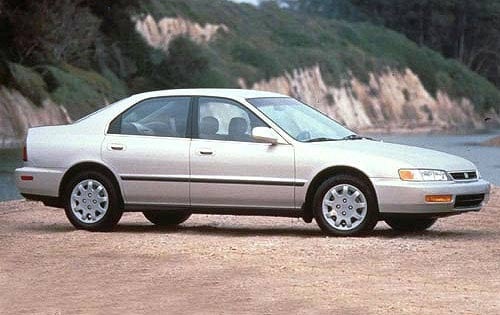
1996 Honda Accord 4 Dr LX V6 Sedan

 Stock Photo of the 1994 Honda Accord

The first thing that made me interested was the new engine. I spoke with the seller and he explained it was installed 10K miles ago and he was using it as a daily commuter locally. The MPG is 22 City / 29 Hwy (25 combined) This would be a big change in gasoline usage (2000 Ford Windstar 15 City / 21 Hwy (21 combined)) To put this in real terms: 

I drive 66 miles round trip to and from work daily which is 17,160 miles per year.
Realistically I'm getting about 19 MPG on the Ford which is about $3161 in gas per year compared to the Honda at $2071 per year. This is with $3.50 per gallon assumption and the Honda at 29 mpg. The difference is $1090 per year. So in about 3.5 years the initial cost would pay off for itself. This is an important factor because in 1 year I can resell the car for less then what I spent on it and still have a positive cash for the year.

Initial cost      $3500
Gas Savings -  1000
---------------------
Before real loss $2500

What if I were to instead put the gas savings into the Phase 2 car fund to accelerate the quality upgrade?
That is $90 per month bonus on top of the regular savings.

The deal starts to look more interesting for me with these type of numbers. The big risks I saw was the car was over 10 years old (the age of reliability drop) and was the guys honest about the engine being new rather then rebuild. Both cars my wife and I have are over 10 years old and over 200,000 miles and both brands were on the bottom of the bucket of reliability. The 1994 Honda Accord ranked top on reliability, I saw many others for sale with excess of 250,000 miles at the same price as my target, and I had a friend who still had one in pretty bad shape still as a daily commuter so the confidence in this model and year was up. 

I saw the car with a friend and the car looked good except for the tires. The engine looked like a new car engine including all new wiring. I talked him down $100 for the tires and we became the owners.

About 5 miles down the road the car started to overheat. I guessed it had to be something stupid and I was right, one of the coolant lines had came off due to the clamp not being tight. It was a big sign of relief because you have the immediate knee jerk reaction to think you made a bad deal or got ripped off.

At the 10 mile mark the car started to vibrate at about 50 miles per hour and then get good again at 65 miles per hour. I hoped it was not the steering.

When I got home I web searched for any issues I saw with this model. The world wide web is a great money saver. I saw it was caused by not round tires. (I knew I needed to replace them anyway.) I also had the advantage of a friend who had first had knowledge of the year and model car.

So the Phase 1 car was acquired; how good a deal it was is yet to be determined but, the momentum is building to get to free car land


Tuesday, July 23, 2013

Reliability equals Value

The one factor that bugged me about the "Drive Free for Life" plan was the lack of any mention of choice of car in the equation of moving up in vehicles. If you have a bad choice in vehicle it could have an effect on your bottom line. One factor I would like to focus on is reliability.

Often people don't factor in this when purchasing a car. This is a universal factor which should be taken into account no matter what car you get whether new or used, compact electric or diesel bus, etc. I'm a firm believer in momentum building and working out issues to keep my momentum from stopping. The plain truth is I prefer to avoid issues and limit risk.

There is a big gap in the reliability of a vehicle in model and manufacturer. Keep in mind these factors are in constant flux and change all the time.

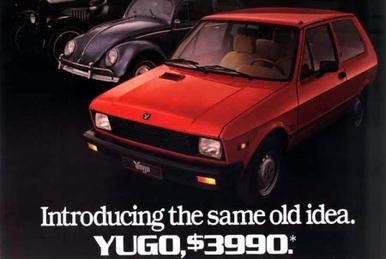
Value is also not just a function of cost. My example of this is the Yugo

1986 YUGO $3990

Thursday, July 11, 2013

Invest in Yourself - Drive Free

I had come across an interesting video from Dave Ramsey's YouTube page ~ "Drive Free - Retire Rich". I would like to suggest watch the video before you read my comments.

Watch Now.

Done? Read on....